
For years, the imposition of monetary contributions by foreign tourists in Bali has been a subject of debates and controversy. The rationale of foreign tourist contributions is that they facilitate the preservation of Bali’s natural and cultural heritage. The recent enactment of the Bali Provincial Regulation No. 1 Year 2020 concerning Tourist Contributions for the Protection of the Natural Environment and Culture of Bali (the Provincial Regulation) seemingly solves the issue. However, a closer look suggests that the Provincial Regulation lacks a convincing legal concept of voluntary tourist contributions. This paper analyses the con- tent, process, and expectation of the creation of the above- mentioned Provincial Regulation, with reference to Indonesian laws and regulations, and reports conclusions drawn from meetings and interviews with relevant authorities. It is argued that, instead of providing specific regulations of the collection and management of voluntary contributions, the Provincial Regulation delegates the Governor to determine these matters through executive order. Undoubtedly, this dissociates with stakeholder expectations related to the preservation of Bali’s natural and cultural riches and the improvement of tourist facilities and services in Bali. Finally, the paper addresses the issue of implementing the Regulation in the light of the impact of the Covid-19 pandemic on tourism.
For years, the imposition of monetary contributions on foreign tourists in Bali has been the subject of debate and controversy. The rationale behind these contributions is that they facilitate the preservation of Bali’s natural and cultural heritage. The recent enactment of Bali Provincial Regulation No. 1 of 2020 concerning Tourist Contributions for the Protection of the Natural Environment and Culture of Bali (the Provincial Regulation) seemingly resolves this issue. However, a closer examination suggests that the Provincial Regulation lacks a convincing legal concept of voluntary tourist contributions. This paper analyses the content, process, and expectations surrounding the creation of the aforementioned Provincial Regulation, with reference to Indonesian laws and regulations, and reports conclusions drawn from meetings and interviews with relevant authorities. It argues that, instead of providing specific regulations governing the collection and management of voluntary contributions, the Provincial Regulation delegates these matters to the Governor to determine through an executive order. This approach is inconsistent with stakeholder expectations concerning the preservation of Bali’s natural and cultural heritage and the improvement of tourist facilities and services in Bali. Finally, the paper addresses the implementation of the Regulation in light of the impact of the COVID-19 pandemic on tourism.
Tourism levy; Voluntary contributions; Funding; Bali
Below is the revised version with improved grammar, sentence structure, academic flow, and consistency. I have kept the citations/reference numbers and have **not added blank lines between paragraphs**.
Bali is a province in the Unitary State of the Republic of Indonesia. Known worldwide as a tourist destination, Bali is divided into eight regencies—Badung, Bangli, Buleleng, Gianyar, Jembrana, Karangasem, Klungkung, and Tabanan—and the Municipality of Denpasar. Bali develops cultural-based tourism, which is deeply rooted in Hinduism and the philosophy of Tri Hita Karana. Bali’s unique cultural heritage has also been recognized by the World Heritage Committee, which inscribed the Cultural Landscape of Bali Province on the World Heritage List.2,3 This recognition reflects the importance of maintaining a proper interconnection between culture and tourism in order to ensure the well-being of society, culture, and the environment.4
Tourism is the largest industry in Bali and, for decades, the tourism sector has contributed significantly to the Province’s economy. The Global Destination Cities Index 2019 revealed that Bali receives approximately 8.23 million foreign visitors each year, with an average stay of 8.6 days and average daily spending of USD 125. The Index also indicates that Bali is one of the world’s leading tourist destinations in terms of employment generation, estimating that every 1,000 additional tourists support approximately 409 jobs.5
In the context of financial administration, however, tourism does not directly correspond to the revenue of the Bali Provincial Government. Visa fees imposed on foreigners, including the 30-day Visa on Arrival (VoA) paid upon arrival at Bali International Airport, are transferred to the Indonesian national government and categorized as non-tax revenue.6 It is estimated that Bali contributes between USD 9 billion and USD 10.4 billion in foreign exchange annually through cultural tourism.7 The Bali Provincial Government, however, does not receive direct revenue from the national government corresponding to this increase in tourism-generated foreign exchange.8 National law determines that profit-sharing funds can only be distributed from natural resource revenues, such as forestry, general mining, fisheries, petroleum, natural gas, and geothermal resources,9 none of which are major sectors exploited in Bali.
Consequently, it has been argued that a judicial review should be submitted to the Constitutional Court of the Republic of Indonesia to examine whether the National Law on Fiscal Balance Between the National Government and Regional Government is consistent with the 1945 Constitution of the Republic of Indonesia.10 The objective of such a review would be to enable Bali to receive an appropriate share of the national budget in recognition of its substantial contribution to the national economy through tourism-generated foreign exchange.11
The limited budget available for the preservation of Bali’s natural and cultural heritage may create incentives to exploit nature and culture as tourism-related economic resources.12 In the context of regional tax distribution, tourism-related taxes, including hotel, restaurant, and entertainment taxes, primarily benefit regency and municipality governments rather than the provincial government.13 Provincial taxes consist mainly of motor vehicle tax, motor vehicle ownership transfer fees, motor vehicle fuel tax, surface water tax, and cigarette tax. As stated by the Governor of Bali Province, motor vehicle tax and motor vehicle ownership transfer fees cannot reasonably be increased further because the growing number of motor vehicles has contributed to increased traffic congestion and air pollution.14,15 This may be one of the reasons why the Bali Provincial Government has limited financial resources to address the negative impacts of tourism.
A study found that the budgets allocated by the provincial and regency/municipality governments to preserve Bali’s natural and cultural environment are insufficient in comparison with the increasing environmental damage. For example, agricultural land has continuously been converted at an average rate of approximately 700 hectares per year, primarily for the construction of tourism-related accommodation.16,17 This trend may endanger local food production and businesses. In addition, Balinese culture has experienced degradation as a result of globalization, modernization, and tourism development.18
In 2018, a proposal was introduced to impose a contribution of USD 10 on each foreign tourist, while domestic tourists visiting Bali would be required to pay USD 0.70 per visit. The initiative aimed to generate regional revenue, with the expectation that the Bali Provincial Government could collect approximately USD 70 million annually, assuming seven million tourist visits per year. The funds were intended to support the preservation of Bali’s natural and cultural environment.19,20 This proposal led to a public perception that the contributions would be mandatory for foreign visitors as compensation for the impact of tourism on the preservation of nature and culture.
The Governor’s proposal appeared to support the concept of establishing Bali as a “one-island tourism management system,” under which funds collected at the provincial level would be distributed to regencies and the municipality to support cultural, environmental, and infrastructure needs. This initiative was considered potentially beneficial because the funds could be used for cultural preservation and tourism programs throughout the regions.21,22
The Governor’s proposal received both support and opposition from tourism stakeholders. For example, the Chairman of the Indonesian Hotel and Restaurant Association of Badung Regency supported the idea and proposed alternative methods of collecting tourism contributions, including airport service charges imposed when travelers enter Bali or a combination of airline tickets and airport taxes.23 A General Manager of an Indonesian airport expressed the view that the levy collected through airline tickets should be reduced to USD 5.24 In contrast, the Chairperson of the Indonesian Tourism Intellectual Association opposed the proposal, arguing that it could reduce tourist arrivals to Bali by approximately 15 percent.25
Strong objections were also expressed by the International Air Transport Association (IATA) concerning the proposed method of collection, particularly the inclusion of the levy in airline tickets. In January 2019, the IATA Regional Vice President for Asia Pacific warned the Bali Government that the initiative was inconsistent with the taxation policy of the International Civil Aviation Organization (ICAO).27 The representative referred to Article 15 of the Convention on International Civil Aviation (Chicago Convention), which provides that “No fees, dues or other charges shall be imposed by any contracting State in respect solely of the right of transit over or entry into or exit from its territory of any aircraft of a contracting State or persons or property thereon.”28 Indonesia ratified the Convention on 27 April 1950,29 thereby assuming an international legal obligation to respect and implement its provisions.
In response to the proposal, the Indonesian Minister of Tourism stated that any levy should be packaged creatively. The Minister also suggested that local leaders should consider the possibility of elasticity in tourism marketing, whereby an increase in costs could result in a decrease in tourist visits.30
Despite the criticism and objections, the Bali Regional House of Representatives and the Bali Province Governor jointly approved the Draft of the Bali Provincial Regulation concerning the Protection of Bali’s Natural Environment and Culture through Tourism Contributions (hereinafter, the Draft) in August 2019.31 At that time, the Draft became an important document in determining whether the proposed tourist levy would have a legitimate legal basis. Despite the political optimism surrounding the proposal, the initiative was also influenced by unsuccessful attempts in the past. For example, in 2013, the Bali Province Governor issued a regulation imposing a mandatory levy of USD 10 on foreign tourists, of which USD 5 would be allocated to cultural and environmental preservation and USD 5 would be used as safety insurance for foreign tourists during their stay in Bali.32 However, the regulation could not be implemented because it was considered incompatible with Law of the Republic of Indonesia No. 28 of 2009 concerning Regional Taxes and Regional Retributions.33
Following a series of consultations and facilitation processes, Bali Provincial Regulation No. 1 of 2020 concerning Tourist Contributions for the Protection of the Natural Environment and Culture of Bali (hereinafter, the Provincial Regulation) was officially enacted in April 2020.34 The final version modified and incorporated several elements of the Draft, including a slight adjustment to the title, greater emphasis on the voluntary nature of the contribution, and more detailed provisions concerning supervision and monitoring mechanisms. Compared with previous proposals that had remained unrealized for decades, the enactment of this Provincial Regulation represented a significant development.35
The present analysis focuses on the content of the Provincial Regulation, the process through which it was developed, and the expected outcomes of its implementation. For the purposes of this paper, monetary amounts are presented in US dollars at the exchange rate of USD 1 = IDR 14,400.36 The paper primarily analyses relevant legal instruments, particularly Indonesian laws and regulations. Opinions, perceptions, and clarifications were obtained from interviewees through qualitative interviews and open discussions. The interviewees included a senator at the national level, government officials at the provincial and regency/municipality levels, the Secretary of the Expert Team of Bali’s Customary Village Assembly, and a lawyer.
This legal research may be useful to interdisciplinary readers because it incorporates economic, tourism, and cultural perspectives into the analysis. It also provides a perspective for legal scholars, policymakers, and tourism stakeholders, particularly those involved in the development of regulations and policies in the tourism sector. Furthermore, it may serve as a reference and lesson for those involved in tourism taxation and levy systems and the management of regional tourism destinations. Finally, given the limited scholarly literature on tourism levies in Bali, some of the sources used in this paper are online newspaper articles addressing the issue. Accordingly, this paper contributes new knowledge and identifies opportunities for future research concerning legislation related to tourism taxation and levies in Bali.
The terms “tourist contribution” and “tourism levy” used in this paper are broadly comparable to the concept of “tourism tax” commonly used in the global tourism context. In discussions concerning taxation and tourism, taxes are described as “compulsory unrequited payments to general government,” including central administrations, agencies whose operations are under their effective control, state and local governments and their administrations, certain social security schemes, and autonomous government entities, excluding public enterprises.37 The United Nations World Tourism Organization (UNWTO) defines tourism taxes as taxes that are applicable specifically to tourists and the tourism sector or, alternatively, taxes that are not specific to the tourism sector but are applied differently in tourist destinations.38 In general, the UNWTO emphasizes that tourist taxes should be harmonized across countries and regions to minimize competitive distortions between destinations. The UNWTO has consistently advised countries to exercise caution when developing tax policies affecting tourists.39 For example, in May 2014, the UNWTO Secretary-General, Taleb Rifai, urged African countries to carefully consider the taxation of air passengers and hotel guests, including its potential consequences for tourism demand, economic growth, and employment in the tourism sector.40 The UNWTO Global Code of Ethics for Tourism (GCET) further provides that “specific taxes and levies penalizing the tourism industry and undermining its competitiveness should be gradually phased out or corrected.”41,42
The practices of different countries and regions also demonstrate considerable variation in the application of tourism taxes and levies. Austria, for example, applies a variety of general and tourism-specific taxes, including corporate and personal income taxes, real estate taxes, value-added tax (VAT), occupancy taxes, and air passenger or departure taxes.43 In January 2019, Japan introduced a tourist tax commonly referred to as the “sayonara tax,” under which visitors departing Japan by air or sea are required to pay JPY 1,000 (approximately USD 10). The revenue is intended to diversify tourism resources and develop tourism-related infrastructure.44 A sustainable tourism tax intended to contribute to environmental conservation has also been introduced by the Balearic Government and applies to visitors staying in hotels and villas as well as passengers on cruise ships. Similar taxation policies have been adopted in France, Germany, Italy, and Croatia.45
Several studies have examined the use of tourism levies and taxes at the regional level. For instance, Li, Guo, Zhu, and Chen (2010) proposed that tourists visiting Miyun County, People’s Republic of China, should contribute between 5% and 15% of their total expenditure toward environmental conservation, with the contribution collected through tourist attraction entrance fees and other mechanisms. The authors argue that a high-quality ecological environment may be considered a public good and, therefore, that governments may impose taxes on tourists to finance environmental conservation and improvement.46
Rather than increasing tourism-related taxes, some studies indicate that reducing such taxes can be an effective means of supporting national macroeconomic development, particularly by encouraging investment. In Albania, for example, reducing the tourism value-added tax (VAT) from 20% to 6% was found to have the potential to attract public and private investment, both domestic and foreign, increase income generated by foreign visitors and tour operators, and contribute to the formalization of the economy, particularly within the tourism sector.47 In Jordan, a 2% reduction in the tax applicable to tourism accommodation rooms reportedly increased occupancy rates and attracted additional foreign direct investment.48
A comparative study of tourist taxes in Italy and Russia found that the revenues were intended to support cultural and environmental heritage, tourism infrastructure, and public services. However, the introduction of tourist taxes in both countries was strongly criticized by hotel associations, which argued that non-residents should not be required to pay for services from which they do not directly benefit.49 Similarly, in Zanzibar, where tourism is the largest source of foreign exchange, the tax system has created a substantial administrative burden. This situation has been associated with the absence of a specific legal framework governing levies applicable to tour operators, restaurants, and hotels.50
What lessons can Bali draw from the global framework and practices concerning tourism taxation in the development of its Provincial Regulation? The objectives underlying the creation of the Provincial Regulation are similar to practices in several countries, such as the sustainable tourism tax imposed by the Balearic Government for environmental conservation and tourism taxes in Italy and Russia intended to support cultural and environmental heritage. Therefore, the Bali Government’s approach is not unprecedented in global tourism practice and should be understood within the broader international context of tourism taxation. Nevertheless, the Bali Provincial Government should carefully consider the potential impact of a tourism levy on the competitiveness of the destination. There is also a need to clearly define the contributors or taxpayers, the applicable amount or percentage, and the procedures for collection and administration in order to prevent complexity and uncertainty within the levy system.
In order to assess whether Bali Province genuinely needs a tourism levy, it is necessary to examine its financial capacity. As part of the Unitary State of the Republic of Indonesia, the Bali Provincial Government is required to comply with existing national laws and regulations governing regional finance, particularly those concerning the delegation of certain authorities from the national government to regional governments. Article 285 paragraph (1) of Law of the Republic of Indonesia No. 23 of 2014 concerning Local Government (Local Government Law) provides that the sources of regional revenue consist of:
1. Locally generated revenue (regional original income), which includes regional taxes, regional retributions (levies), proceeds from the management of separated regional assets, and other legitimate locally generated revenue;
2. Transfer revenue; and
3. Other legitimate regional revenue.
The following section describes how the provisions concerning regional revenue under the Local Government Law were implemented by the Bali Provincial Government in 2019.
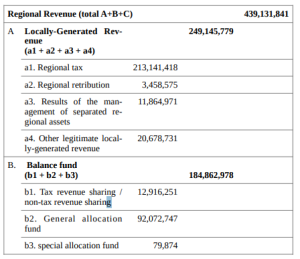
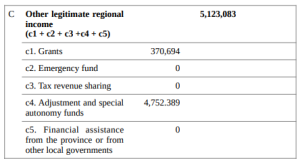
**Table 1. Details of Regional Revenue of Bali Province in 2019 (in US dollars; USD 1 = IDR 14,400).**51
As shown in Table 1, the total regional revenue of Bali Province in 2019 amounted to USD 439,131,841. More than half of the total revenue was generated from locally generated revenue, primarily through regional taxes, particularly motor vehicle tax. This regional revenue should be considered alongside other relevant indicators, including population and Gross Regional Domestic Product (GDP) per capita. In 2018, the projected population of Bali was approximately 4.29 million people, while GDP per capita based on current prices (atas dasar harga berlaku/ADHB) reached approximately USD 3,793.52
Regional revenue increased in 2020 compared with the previous year. Total regional revenue in 2020 amounted to USD 458,717,525, consisting of locally generated revenue of USD 261,282,979, balance funds of USD 193,529,209, and other legitimate regional income of USD 3,905,336.53 Both locally generated revenue and balance funds increased, while other legitimate regional income decreased. At first glance, Bali Province appears to have relatively strong financial capacity within the context of Indonesia as a developing country, particularly considering that Bali does not possess significant natural resources for large-scale mining activities.
Nevertheless, it should be taken into account that the budget allocated by the Bali Provincial Government for the preservation of the province’s natural and cultural environment remains insufficient in comparison with the increasing level of environmental and cultural damage.54 The Bali Provincial Government has an established annual practice of allocating special financial assistance through its regional budget to support customary villages, traditional water irrigation systems (subak), ceremonial activities, places of worship, and arts groups, as well as to organize the annual Bali Arts Festival. However, additional sources of income may still be necessary to adequately fund these activities and address the broader financial requirements associated with the preservation of Bali’s natural and cultural heritage.
National law determines that regional taxes and levies must be established by law and, to make them effective at the regional level, further regulated through regional regulations. The relevant provisions also confirm that regional governments are prohibited from imposing levies or other charges beyond those stipulated by law, particularly where such measures may create a high-cost economy or hinder the mobility of the population.56,57 This legal framework appears to have been taken into consideration by the Bali Provincial Government when initiating the Draft Provincial Regulation concerning the Protection of Bali’s Natural Environment and Culture through Tourism Contributions (hereinafter, “the Draft”). Within the hierarchy of laws and regulations, the Provincial Regulation refers to several national legal instruments, including Law No. 10 of 2009 concerning Tourism, Law No. 32 of 2009 concerning Environmental Protection and Management, Law No. 23 of 2014 concerning Local Government, Law No. 5 of 2017 concerning the Advancement of Culture, Government Regulation No. 27 of 2014 concerning the Management of State/Regional Property, and Government Regulation No. 12 of 2019 concerning Regional Financial Management. Notably, the Provincial Regulation does not refer to national laws and regulations specifically governing taxation and regional retributions because the proposed contribution scheme does not appear to fall within those existing legal regimes.
The Provincial Regulation uses the term “contribution” rather than “tax,” “retribution,” or “levy.” There was also a proposal to replace the term “contribution” with “donation,” on the basis that the latter, in legal terms, is distinct from both regional taxes and regional retributions, which are strictly regulated under national law.58 From a normative legal perspective, the definition and selection of a legal term can determine the scope and applicability of a law or regulation. Accordingly, selecting an appropriate legal term in the context of Bali Province may provide a means of avoiding the strict application of national laws governing taxation and regional retributions.
Article 3 of the Provincial Regulation identifies six purposes for establishing tourist contributions, namely:
1. the protection of nature and the environment and the management of waste;
2. the protection of customs, traditions, arts and culture, and local wisdom;
3. the acceleration and strengthening of efforts to advance Balinese culture as part of the national culture while upholding the spirit of unity in diversity;
4. the empowerment of customary villages;
5. the construction of arts and cultural facilities and infrastructure; and
6. the improvement of the quality of tourism services and the organization of tourism in Bali.
Most of the legal and political debates surrounding the creation of the Provincial Regulation focused on Article 4. Article 4 paragraph (1) requires every tourist visiting Bali Province to contribute to the protection of Bali’s natural environment and culture. The phrase “every tourist” refers to both domestic and foreign tourists visiting Bali.59 Therefore, the proposed regulation does not exclusively target foreign tourists but also applies to Indonesian tourists.
Article 4 paragraph (2) provides that the tourist contribution is voluntary and may be made in the form of goods and/or money. The adoption of a voluntary contribution appears to represent a pragmatic compromise intended to accommodate the political objective of establishing a legitimate mechanism for tourist contributions while avoiding incompatibility with higher laws and regulations that prohibit or restrict similar forms of mandatory levies. Accordingly, the meaning of “voluntary contribution” under the Provincial Regulation cannot simply be equated with the tourism taxes and levies practiced in various countries and regions around the world.
Given its voluntary nature, the contribution scheme would presumably not generate annual revenue of USD 70 million for the Bali Provincial Government, as had been anticipated in 2018. Furthermore, Article 4 does not specify the precise mechanism for collecting the contribution. Instead, it provides that contributions are facilitated or communicated to tourists by the provincial apparatus responsible for tourism affairs, with the contribution evidenced by a receipt.
Article 5 subsequently provides that provisions concerning the management of tourist contributions will be further regulated through a Governor’s Regulation. In addition, Article 6 of the Provincial Regulation assures tourists that they will receive benefits associated with the contributions, including:
7. improved tourism information services that are comprehensive, integrated, and up to date;
8. a clean, beautiful, and sustainable natural environment in both material and spiritual (sekala and niskala) aspects;
9. the preservation of diverse customs, traditions, arts and culture, and local wisdom, including the spiritual aura known as metaksu;
10. cleanliness, orderliness, comfort, and safety in tourist destination areas;
11. services during disasters; and
12. higher-quality tourism services and tourism management in Bali.
The contents of Article 6 reflect the statement of the Discussion Coordinator of the Draft Provincial Regulation, who emphasized that tourist contributions should provide tangible returns and benefits to tourists, particularly through improvements in comprehensive, integrated, and up-to-date tourism information services. The provision also emphasizes cleanliness, order, comfort, and security in tourist destinations, accelerated services in the event of disasters, priority hospital services, and the delivery of higher-quality tourism services in Bali.60
The benefits promised to tourists under Article 6 are broadly comparable to those provided under tourism contribution or taxation schemes in other regions and countries, where revenues are intended to improve the quality of tourism while supporting cultural and environmental preservation. Tourists visiting Bali are also promised distinctive benefits, including opportunities to experience intangible spiritual dimensions referred to as niskala and taksu. These may constitute non-measurable benefits that distinguish Bali from other tourism destinations.
Article 7 of the Provincial Regulation provides that if tourists do not receive the benefits referred to in Article 6, they may submit a written complaint to the relevant Tourism Office, which must follow up the complaint in accordance with applicable legislation. Supervision and monitoring are also important elements addressed by the Provincial Regulation. Under Article 8, the Governor is responsible for supervising and monitoring the implementation of tourist contributions. These functions are technically carried out by the Regional Apparatus responsible for tourism affairs, while tourist contributions in the form of goods and/or money are administered through the Government Internal Supervisory Apparatus. In addition, Article 9 ensures that the public may participate in implementing the Provincial Regulation by providing input and suggestions and by supervising the use of tourist contribution funds.
Procedural issues arose following the Plenary Meeting of the Bali Regional House of Representatives on 20 August 2019, at which the Governor’s proposal was approved as a Draft Provincial Regulation. The subsequent process then shifted to the national government. Article 18 of Law No. 10 of 2009 concerning Tourism (Tourism Law) stipulates that regional governments may regulate and administer tourism affairs in accordance with statutory provisions; however, it does not explicitly authorize provincial governments to impose tourism taxes or retributions.61
The national government appeared to have concerns about the potential implications of the proposed regulation. From a political and legal perspective, one potential consequence was that other provincial or regency/municipality governments in Indonesia might seek to establish similar regional regulations imposing levies on tourists, either for similar purposes or based on different justifications. The central issue was whether such levies would effectively support the tourism, cultural, and environmental objectives of the respective regions or, conversely, prove counterproductive to the efforts of the national and regional governments to promote foreign tourism in Indonesia’s priority tourism destinations.
As revealed by the Governor of Bali Province in August 2019, the Ministry of Finance took the view that there was no existing legal basis for establishing such a provincial regulation because the proposed contribution could not be categorized as either a regional tax or regional retribution under Law No. 28 of 2009 concerning Regional Taxes and Regional Retributions.62 Nevertheless, the Governor continued to advocate for the proposal, arguing that Law No. 23 of 2014 concerning Local Government generally permits regional governments to explore other legitimate sources of revenue.
The Governor acknowledged that, although the Ministry of Tourism and the Ministry of Home Affairs had agreed with the Draft, it still required synchronization with the Directorate General of Fiscal Balance, a national government body under the Ministry of Finance.63 The Directorate General is responsible for formulating and implementing policies concerning regional taxes and retributions and for establishing the relevant norms, standards, procedures, and criteria in these areas.64
Progress was subsequently reported when, on 11 November 2019, it was revealed that the Draft was awaiting the results of facilitation by the Ministry of Home Affairs.65 On 6 December 2019, the Speakers of the Bali Regional House of Representatives informed Senators of the Regional Representative Council about the stalled status of the Draft and requested their support.66 As a follow-up, the Draft was discussed on 13 December 2019 by Senator Made Mangku Pastika, officials from the Bali Provincial Government Bureau of Law and Human Rights, and several members of the expert team.67 On the same day, the leaders of the Bali Regional House of Representatives conveyed their concerns and aspirations to the Ministry of Home Affairs in Jakarta, where the Ministry expressed its support for the Draft.
Following a series of consultations and facilitation between the regional and national governments, the Ministry of Home Affairs issued a letter in January 2020 granting a registration number to the Draft.68 The granting of the registration number indicated that the results of the facilitation had been verified and that the revised Draft had undergone the necessary review. Consequently, the Draft could officially be enacted as a Provincial Regulation by the Governor and subsequently promulgated in the regional gazette.69
The implementing regulation of the Provincial Regulation concerning the management of tourist contributions was expected to be issued by the Governor no later than six months after the enactment of the Provincial Regulation, that is, by October 2020.70 The forthcoming Bali Governor’s Regulation was expected to regulate various technical aspects of the contribution scheme.
The benefits associated with the protection of Bali’s natural and cultural environment identified in the Provincial Regulation include waste management equipment, ambulances, plant seeds, cleaning equipment, traditional musical instruments, and other related items.71 However, the Provincial Regulation does not specify the currency to be used for monetary contributions. It also fails to clarify the form in which receipts should be issued, whether in physical or electronic format. Therefore, the forthcoming Governor’s Regulation should provide detailed provisions concerning the flow and management of contributions, the applicable currency, and the form and issuance of receipts.
In addition, the Governor’s Regulation should identify priority environmental and cultural programs to be financed through the contributions and establish mechanisms for distributing the funds among regencies and the municipality in Bali, as well as relevant stakeholders in the fields of environment, culture, and tourism. It should also ensure improvements to tourism facilities and services that can be directly enjoyed by tourists and tourism industry stakeholders who contribute to the scheme.72
As Bali promotes cultural tourism, the contributions could be used to advance and finance the ten cultural elements recognized under the relevant cultural framework, namely:73
1. Oral traditions;
2. Manuscripts;
3. Customs;
4. Rites and religious ceremonies;
5. Traditional knowledge;
6. Traditional technology;
7. Art;
8. Language;
9. Folk games; and
10. Traditional sports.74
Furthermore, tourist contributions could be used to finance cultural heritage preservation and strengthen the role and sustainability of customary villages in Bali.75,76 This approach would be consistent with the Bali Provincial Government’s policy of establishing the Office of Customary Village Advancement in October 2019, which was assigned responsibility for matters relating to 1,943 customary villages in Bali.77 In that year, each customary village received funding of approximately USD 20,833.78 Tourist contributions could potentially provide an additional source of funding for customary village activities in the future.
For example, a portion of the contributions could be allocated to stimulate the Baga Utsaha Padruwen Desa Adat in developing creative and sustainable approaches to integrating cultural events and ceremonies with economically viable tourism activities.79
The enactment of the Provincial Regulation may temporarily lose its relevance in the months following its adoption, as Bali could not avoid the severe impact of the global COVID-19 pandemic. Due to widespread travel warnings and restrictions on airport and port operations affecting travel to and from Bali, tourism activity in the province was reduced to an unprecedented level. The situation in April 2020 provides a strong indication of the scale of the tourism crisis. During that month, only 327 foreign tourists visited Bali, including 273 arriving by air and 54 arriving by sea. Meanwhile, the occupancy rate of starred hotel rooms was recorded at only 3.22%, with an average length of stay of 2.49 days.80 This situation was further aggravated by restrictions on the operation of tourist attractions, leisure facilities, and entertainment venues.81
The drastic decline in tourist arrivals resulted in a significant number of workers in the tourism industry losing their jobs and businesses experiencing severe financial difficulties. Given that economic activities in Bali are directly, indirectly, and consequentially connected to tourism services, which employ a substantial proportion of the workforce, the impact was particularly devastating.82 Bali’s economic growth contracted by 1.14% year-on-year in the first quarter of 2020, while potential losses in the leisure and MICE (meetings, incentives, conferences, and exhibitions) sectors from February to October 2020 were estimated at approximately USD 344 million. Based on tourists’ average length of stay, the estimated monthly loss was approximately USD 673 million.83
Under these circumstances, local leaders needed to recognize that tourism alone could not be expected to resolve all community problems or serve as the primary source of revenue through tourism contributions, levies, or taxes.85 Bali’s resilience in responding to declines in foreign tourist arrivals has been demonstrated over the previous two decades. During this period, Bali experienced several major disruptions, including terrorist bombings, the SARS pandemic, and volcanic eruptions, which resulted in travel advisories being issued by numerous countries. Following these natural and human-made disasters, Bali gradually succeeded in restoring its tourism sector. However, the COVID-19 pandemic was exceptional in both its scale and nature.
Micro, small, and medium-sized enterprises, as well as other informal economic sectors, were also recovering slowly. Experts suggested that tourism recovery could require at least six months after the pandemic was brought under control, while some commentators anticipated that recovery could take several years. A more optimistic position was expressed by the national government, which expected Bali to be among the destinations capable of recovering relatively quickly and attracting substantial numbers of tourists once the pandemic had ended. This expectation was partly based on Bali’s demonstrated capacity to control the spread of COVID-19 through local wisdom and the involvement of customary villages.86
The financial capacity of Bali Province in 2020 must therefore be assessed within the context of the pandemic. Government budgets were primarily allocated to meeting the basic needs of the population, particularly in the food and health sectors, maintaining educational activities, and, to some extent, supporting business activities, while private-sector businesses struggled to survive under conditions of considerable uncertainty. In this context, the objective of supporting Bali’s natural and cultural heritage through tourist contributions appeared increasingly distant from the immediate priorities of the government and the tourism sector.
Political discussions concerning tourist contributions could become more relevant and potentially effective after the tourism sector had recovered from the crisis. Even if international travel were to reopen, there would be no guarantee that leisure travel would immediately become a priority for individuals while health and safety remained major concerns. In 2019, the Minister of Tourism issued a regulation concerning Tourism Crisis Management (TCM). TCM consists of a series of measured and systematic actions undertaken within the tourism ecosystem to prepare for, respond to, and recover from crises, including crises caused by infectious diseases and pandemics. The TCM framework consists of four phases: preparedness and mitigation, emergency response, recovery, and normalization.87,88
At the provincial level, regional lawmakers also undertook efforts to ensure compliance with tourism standards and their implementation in Bali in response to the pandemic. A set of regulations was adopted to provide a legal basis for policies concerning the prevention and management of disasters or emergencies and the recovery of Bali’s cultural tourism sector following such events.89 Furthermore, the Bali Provincial Government and the Ministry of Tourism and Creative Economy held a coordination meeting in mid-May 2020 following the designation of Bali as a pilot project for the implementation of the Cleanliness, Health, and Safety (CHS) program launched by the Ministry.
Although there was an expectation that tourism destinations could gradually reopen in October 2020, such reopening remained dependent on the implementation of health protocols, regional preparedness, and decisions by the Bali Provincial Government. At that time, plans indicated that Bali would begin welcoming domestic tourists in August and reopen its borders to international tourists in September 2020, subject to the fulfillment of specified conditions.90,91
Accordingly, the Bali Provincial Government’s immediate priority could reasonably shift toward promoting Bali as a safe tourism destination during and after the global pandemic rather than actively emphasizing tourist contributions. A series of promotional initiatives designed to encourage tourist arrivals and revive the tourism industry could be considered more appropriate during this period than imposing or emphasizing contributions that might be perceived as an additional burden on tourists during an exceptionally difficult period for international travel.
Here is the revised version in a more polished **academic and journal-appropriate style**, while preserving the original meaning, legal references, and conclusions.
The article has revealed several facts concerning the efforts of the Bali Provincial Government to impose a contribution on foreign tourists visiting Bali. Several conclusions may be drawn from the discussion. The imposition of tourism-related levies on foreign tourists has been practiced in various forms by national and subnational governments around the world. Therefore, the creation of the Draft Provincial Regulation concerning the Protection of Bali’s Natural Environment and Culture through Tourism Contributions (the “Draft”) by the Bali Provincial Government reflects an effort to utilize tourism as a means of supporting the sustainability of Bali’s natural environment and cultural heritage. The Draft was received with high expectations as a potential solution for financing the preservation of Bali’s natural environment and culture. Most local tourism stakeholders considered the Draft an effective and efficient mechanism for collecting funds from tourists, particularly foreign tourists, which could subsequently be allocated to strategic sectors. In contrast, some international and local stakeholders expressed different views regarding the appropriate mechanism for collecting such contributions, including through an airfare tax, airport arrival charge, or other means. They also expressed concerns that such a levy could reduce the number of foreign tourists planning to visit Bali.
The Bali Provincial Regulation No. 1 of 2020 concerning Tourist Contributions for the Protection of the Natural Environment and Culture of Bali was eventually enacted in April 2020. The Regulation clarifies one of the most contentious issues by characterizing the contribution as voluntary, thereby distinguishing it from a conventional tourism tax, levy, or retribution. The Provincial Regulation also clarifies that the contribution may be collected from both foreign and domestic tourists. However, several technical matters are not addressed in the Regulation, including the mechanisms for collecting and administering the contributions. These matters were intended to be further regulated through an implementing regulation to be issued no later than October 2020.
There is no guarantee that the Provincial Regulation will resolve the problem of insufficient funding for the preservation of Bali’s natural environment and culture. The voluntary nature of the tourist contribution means that the amount collected will depend on the willingness and generosity of tourists. Consequently, the revenue generated through such contributions is uncertain and cannot reliably be incorporated into government income projections. In this regard, local governments throughout Bali should establish and implement minimum standards to ensure that tourism activities, particularly mass tourism, do not diminish the quality of the natural environment or undermine efforts to preserve local culture and traditions. The initiative to involve communities at the lowest administrative level, particularly customary villages, in the management of tourist destinations should also be continued. On the one hand, local governments can continue to generate revenue through retributions imposed at tourism sites; on the other hand, customary communities, as custodians and inheritors of the natural and cultural heritage of tourist destinations, can directly benefit from tourism while continuing to maintain their local wisdom and traditions in preserving the environment and culture.
The global COVID-19 pandemic has posed a serious challenge to the implementation of tourist contributions. Bali experienced severe economic disruption due to the dramatic decline, and in some periods the near absence, of tourists following the implementation of travel restrictions. In these circumstances, efforts to restore the foundations of the local economy have become more urgent, making discussions concerning the implementation of tourism contributions less immediate. The Bali Provincial Government should therefore prioritize programs that encourage the return of tourists and support the recovery of the tourism industry, which is fundamental to the Balinese economy. Imposing additional contributions may not be convenient for tourists during a period in which international travel remains severely constrained. Once the tourism sector has recovered, the protection of Bali’s natural environment and cultural heritage should again be placed among the government’s principal priorities. Accordingly, the realization of the tourism contribution provided for under the Provincial Regulation may become more feasible and effective once the tourism industry has returned to normal operating conditions.
**Acknowledgment and Disclosure**
The research was funded by Udayana University under the Scheme of Penelitian Unggulan Program Studi (PUPS) in 2019. The authors express their gratitude to the heads of the Research and Community Services Institution and the Faculty of Law of Udayana University, as well as to the Legal Bureau of the Regional Secretariat of Bali Province; Anak Agung Ngurah Adhi Ardana, Member of the Bali Regional House of Representatives; and all interviewees, namely: Made Mangku Pastika, Member (National Senator) of the Regional Representative Council representing Bali Province; Anak Agung Komang Sapta Negara, Secretary of the Bali Provincial Culture Office; I Gusti Ngurah Supanji and I Made Gama Sumerta, Head and Secretary, respectively, of the Tabanan Regency Culture Office; Ni Ketut Mariatni Sukadewi, Head of the Tourism Destination Division of the Regional Tourism Office of Gianyar Regency; I Gede Nurjaya, Secretary of Nayaka of the Expert Team of the Customary Village Assembly (Majelis Desa Adat/MDA) of Bali Province; and Ketut Ngastawa, Lawyer, Bali.
Bali Regional House of Representative, Final Report on Draft of Bali Provincial Regulation concerning the Standards and Implementation of Bali Cultural Tourism, 14 May 2020.
Decision Adopted by the World Heritage Committee No. 36 COM 8B.26, At Its 36th Session (Saint-Petersburg, 2012), the Cultural Landscape of Bali Province: the Subak System as a Manifestation of the Tri Hita Karana Philosophy, Indonesia
Draft of Bali Provincial Regulation concerning Protection of Bali’s Natural Environment and Culture through Tourism Contributions (2019)
ICAO. Convention on International Civil Aviation Signed at Chicago on 7 December 1944 (List of Signatories). https://www.icao.int/secretariat/legal/List%20of%20Parties/Chicago_EN.pdf (accessed 29 December 2019)
Letter of Head of Legal Bureau of the Ministry of Home Affairs to the Head of Legal Bureau of Bali Province No. 188.341/02/NR/BHK, dated 14 January 2020.
Release of Bali Province Governor’s Appeal No. 215/Gugascovid-19/VI/2020, dated 8 June 2020
Resolution adopted by the General Assembly 21 December 2001 A/RES/56/212 Global Code of Ethics for Tourism
PricewaterhouseCoopers LLP-European Commission. (2017). The Impact of Taxes on the Competitiveness of European Tourism, Final Report. Luxembourg: Publications Office of the European Union
ABC Mallorca. (2019). What is Mallorca’s tourist tax? https://www.abcmallorca.com/balearic-tourist-tax-doubles/ (accessed 31 August 2019).
Antara News. (2019). DPRD Bali Beri Saran untuk Ranperda Kontribusi Wisatawan. https://bali.antaranews.com/berita/158938/dprd-bali-beri-saran-untuk-ranperda-kontribusi-wisatawan (accessed 29 December 2019).
Antara News. (2019). Koster: Biaya kontribusi wisatawan disatukan dengan tiket pesawat. https://bali.antaranews.com/berita/135334/koster-biaya-kontribusi-wisatawan-disatukan-dengan-tiket-pesawat (accessed 31 August 2019).
Antara News. (2019). Senator Pastika Ubah Nama Ranperda Kontribusi Wisatawan. https://bali.antaranews.com/berita/173032/senator-pastika-ubah-nama-ranperda-kontribusi-wisatawan (Accessed 29 December 2019).
Antara News. (2020). Gubernur Bali Minta Kantor MDA Diberdayakan Untuk Kemajuan Desa Adat. https://bali.antaranews.com/berita/177935/gubernur-bali-minta-kantor-mda-diberdayakan-untuk-kemajuan-desa-adat (Accessed 24 May 2020).
Badan Pusat Statistik Provinsi Bali. (2019). Pertumbuhan Ekonomi Bali Tahun 2018. https://bali.bps.go.id/pressrelease/2019/02/06/717261/pertumbuhan-ekonomi-bali--tahun-2018.html (Accessed 29 December 2019).
Perkembangan Pariwisata Provinsi Bali April 2020. https://bali.bps.go.id/pressrelease/2020/06/02/717329/perkembangan-pariwisata-provinsi-bali-april-2020.html (Accessed 15 June 2020).
Bali Express. (2019). Dewan Bali Sahkan Ranperda Perubahan RTRW dan Kontribusi Wisatawan. https://baliexpress.jawapos.com/read/2019/08/21/151775/dewan-bali-sahkan-ranperda-perubahan-rtrw-dan-kontribusi-wisatawan (Accessed 29 December 2019).
Bali Travel News. (2018). Rencana Pungutan 10 Dolar per Wisatawan Mesti Dikemas dengan Kreatif. https://bali-travelnews.com/2018/09/25/rencana-pungutan-10-dolar-per-wisatawan-mesti-dikemas-dengan-kreatif/ (Accessed 24 May 2020).
Bali Post. (2020). Alih Fungsi Lahan Pertanian di Bali Rata-Rata 700 Hektar per Tahun. http://www.balipost.com/news/2020/01/17/99216/Alih-Fungsi-Lahan-Pertanian-di...html (Accessed 19 January 2020).
Bali Puspa News. (2019). Perkuat UMKM, Dewan Bali Dukung Pemprov Tambah Penyertaan Modal di BPD Bali. https://www.balipuspanews.com/perkuat-umkm-dewan-bali-dukung-pemprov-tambah-penyertaan-modal-di-bpd-bali.html (Accessed 24 May 2020).
Bali Puspa News. (2019). Senator Pastika Usulkan Ubah Nama Kontribusi menjadi Donasi pada Ranperda Kontribusi Wisatawan. https://www.balipuspanews.com/senator-pastika-usulkan-ubah-nama-kontribusi-menjadi-donasi-pada-ranperda-kontribusi-wisatawan.html (accessed 29 December 2019).
Bali Travel News. (2016). Budaya Bali Alami Degradasi. http://bali-travelnews.com/2016/12/28/budaya-bali-alami-degradasi/ (Accessed 19 January 2020).
Ekonomi Bisnis. (2019). Wisman ke Bali Bakal Dikenai Pungutan US 10 Pelaku Pariwisata Protes. https://ekonomi.bisnis.com/read/20190121/12/880827/wisman-ke-bali-bakal-dikenai-pungutan-us10-pelaku-pariwisata-protes (accessed 31 August 2019).
Independent. (2019). Japan Tourist Tax Cost Levy Airport Tourism Tokyo Olympics 2020. https://www.independent.co.uk/travel/news-and-advice/japan-tourist-tax-cost-levy-airport-tourism-tokyo-olympics-2020-a8721451.html (accessed 29 December 2019).
Jakarta Globe. (2020). Bali Plans to Restore Tourist Confidence and Reopen Borders in September, https://jakartaglobe.id/news/bali-plans-to-restore-tourist-confidence-and-reopen-borders-in-september (Accessed 19 June 2020).
Jaringan Dokumentasi dan Informasi Hukum Pemerintah Provinsi Bali.
Tribun Bali. (2019). DPD RI Perjuangkan 3 UU Untuk Bali: Pastika Sebut Provinsi Tak Dapat Apa-Apa Dari Pariwisata. https://bali.tribunnews.com/2019/12/07/dpd-ri-perjuangkan-3-uu-untuk-bali-pastika-sebut-provinsi-tak-dapat-apa-apa-dari-pariwisata (Accessed 29 December 2019).
Tribun Bali. (2019). Gubernur Koster Berupaya Cari Skema Baru Genjot PAD Bali. https://bali.tribunnews.com/2019/10/31/gubernur-koster-berupaya-cari-skema-baru-genjot-pad-bali (Accessed 24 May 2020).
Tribun Bali. (2019). PHRI Optimis Wisman Tak Surut ke Bali: Rencana Retribusi 10 dolar per Wisatawan. https://bali.tribunnews.com/2019/07/16/rencana-retribusi-10-dolar-per-wisatawan-phri-optimistis-wisman-tak-surut-ke-bali (accessed 31 August 2019).
Tribun Bali. (2020). Agustus Pariwisata Bali Diharapkan Sudah Buka Lagi Dengan Konsep New Normal. https://bali.tribunnews.com/2020/05/23/agustus-pariwisata-bali-diharapkan-sudah-buka-lagi-dengan-konsep-new-normal?page=3 (Accessed 24 May 2020).
(2020). Perda No.1 Tahun 2020. https://jdih.baliprov.go.id/produkhukum/peraturan-perundang-undangan/perda/28547 (accessed 14 June 2020).
Kompas.Com. (2020). Dampak Pandemi Covid-19 Pariwisata Bali Rugi Rp 97 Triliun Tiap Bulan. https://regional.kompas.com/read/2020/05/13/17591091/dampak-pandemi-covid-19-pariwisata-bali-rugi-rp-97-triliun-tiap-bulan (Accessed 14 June 2020).
Kompas. (2020). Kapan Bali akan Buka untuk Wisatawan? https://travel.kompas.com/read/2020/05/22/154200927/kapan-bali-akan-buka-untuk-wisatawan-?page=all (Accessed 14 June 2020).
Kreag, G. (2001). The Impact of Tourism, Minnesota Sea Grant, http://www.seagrant.umn.edu/tourism/pdfs/ImpactsTourism.pdf
Mastercard. (2019). Global Destination Cities Index 2019. https://newsroom.mastercard.com/wp-content/uploads/2019/09/GDCI-Global-Report-FINAL-1.pdf (Accessed 19 January 2020).
Nusa Bali. (2018). Bali Bidik PAD Rp 1 Trilyun dari Turis. https://www.nusabali.com/berita/41956/bali-bidik-pad-rp-1-triliun-dari-turis
Nusa Bali. (2019). AP I Minta Pungutan Turis Cukup 5 Dolar. https://www.nusabali.com/berita/45662/ap-i-minta-pungutan-turis-cukup-5-dolar (accessed 31 August 2019).
Radar Bali. (2019). Biar tak Masuk Unsur Pajak Pastika Usul Kata Donasi jadi Judul Perda. https://radarbali.jawapos.com/read/2019/12/15/170322/biar-tak-masuk-unsur-pajak-pastika-usul-kata-donasi-jadi-judul-perda (Accessed 29 December 2019).
Radar Bangsa. (2020). Bali Diperkirakan Jadi Destinasi Pertama yang Pulih Pasca Pandemi. https://www.radarbangsa.com/travel/24672/bali-diperkirakan-jadi-destinasi-pertama-yang-pulih-pasca-pandemi (Accessed 22 May 2020).
The Jakarta Post. (2019). Global Airline Group IATA Objects to Planned Bali Tourist Tax. https://www.thejakartapost.com/news/2019/02/19/global-airline-group-iata-objects-to-planned-bali-tourist-tax.html (accessed 31 August 2019).
Tribun Bali. (2018). Gubernur Bali Wacanakan Biaya Kontribusi Masuk ke Bali Turis Asing Bayar 10 Dolar lokal Rp 10 ribu. https://travel.tribunnews.com/2018/11/20/gubernur-bali-wacanakan-biaya-kontribusi-masuk-ke-bali-turis-asing-bayar-10-dolar-lokal-rp-10-ribu (Accessed 17 March 2019).
The 1945 Constitution of the Republic of Indonesia
Law of the Republic of Indonesia No. 33 Year 2004 concerning Fiscal Balance Between the National Government and Regional Government
Law of the Republic of Indonesia No. 10 Year 2009 concerning Tourism
Law of the Republic of Indonesia No. 28 Year 2009 concerning Regional Tax and Retribution
Law of the Republic of Indonesia No. 11 Year 2010 concerning Cultural Heritage
Law of the Republic of Indonesia No. 12 Year 2011 concerning Establishment of Law and Regulations
Law of the Republic of Indonesia No. 23 Year 2014 concerning Local Government
Law of the Republic of Indonesia No. 5 Year 2017 concerning the Advancement of Culture
Law of the Republic of Indonesia No. 20 Year 2019 concerning State Budget Revenues and Expenditures of the Year 2020
Regulation of the Government of Republic of Indonesia No. 28 Year 2019 concerning Type and Tarif of Non-Tax Revenue Applies for Ministry of Law and Human Rights
Regulation of the President of the Republic of Indonesia No. 28 Year 2015 concerning the Ministry of Finance
Minister of Home Affairs Regulation No. 80 Year 2015 concerning The Establishment of Regional Regulations, as latest amended by Minister of Home Affairs Regulation No. 120 Year 2018
Minister of Tourism Regulation No. 10 Year 2019 concerning Tourism Crisis Management
Bali Provincial Regulation No. 2 Year 2012 concerning Culture Tourism of Bali
Bali Provincial Regulation No. 10 Year 2018 concerning Regional Budget Revenues and Expenditures Semesta Berencana of the Year 2019
Bali Provincial Regulation No. 7 Year 2019 concerning Amendment to Regional Regulation No. 10 Year 2016 concerning Formation and Arrangement of Regional Organization
Bali Provincial Regulation No. 11 Year 2019 concerning Regional Budget Revenues and Expenditures Semesta Berencana of the Year 2020
Bali Provincial Regulation No. 1 Year 2020 concerning Tourist Contributions for the Protection of the Natural Environment and Culture of Bali
Regulation of Bali Province Governor No. 41 Year 2013 concerning the Amendment of Regulation of Bali Province Governor No. 58 Year 2012 concerning Programs of Culture Preservation and Environmental Protection
Regulation of Bali Provincial Governor No. 34 Year 2019 Concerning the Financial Management of Customary Villages in Bali
Negara, A.A.K.S. (Secretary of Culture Office Bali Province) Interview held in Denpasar, 15 October 2019.
Ngastawa, K. (Lawyer). Interview held in Denpasar, 14 January 2020.
Nurjaya, I G. (Secretary of Nayaka - Expert team of the Customary Village Assembly/Majelis Desa Adat/MDA of the Bali Province). Interview held in Denpasar, 16 October 2019.
Pastika, M.M. (National Senator at the Regional Representative Council, representing Bali Province). Interview held in Denpasar, 2 January 2020.
Supanji, I G.N. and Sumerta, I M.G. (Head and Secretary Tabanan Regency Culture Office). Interview held in Tabanan, 4 September 2019.
Sukadewi, N. K. M. (Head of the Tourism Destination Division of the Regional Tourism Office of Gianyar Regency). Interview held in Gianyar, 30 July 2019.
Antara, M & Sumarniasih, M.S. (2017). Role of Tourism in Economy of Bali and Indonesia. Journal of Tourism and Hospitality Management 5(2).
Cela, G. (2018). The Impact Assessment of the VAT Reduction in Tourism Sector. European Scientific Journal, 14 (25).
Falade Obalade, T.A. & Dubey, S. (2014). Managing Tourism as a Source of Revenue and Foreign Direct Investment Inflow in a Developing Country: The Jordanian Experience. International Journal of Academic Research in Economics and Management Sciences, 3(3).
Fontana, C. & Lagutin, I. (2018). Tourist Taxes in Italy and Russia. Russian Law Journal, VI(1).
Ihalanayake, R. (2007). Economics of Tourism Taxation: A Study of Tourism Taxes in Australia, A Thesis submitted in total Fulfilment of the Requirements for the Degree of Doctor of Philosophy, School of Applied Economics, Faculty of Business and Law, Victoria University, Melbourne.
Li, Y., Guo, L., Zhu, W. and Chen, F. (2010). Feasibility Analysis of Collecting Environmental Protection Tax from Tourist in an Environmental Concervation Area: A Case Study of Miyun County, in C. A. Brebbia and F. D. Pineda (Ed), Sustainable Tourism IV. WIT Press. Southampton.
Mahangila, D & Anderson, W. (2017). Tax Administrative Burdens in the Tourism Sector in Zanzibar: Stakeholders’ Perspectives, SAGE Open.
OECD. (2014). OECD Tourism Trends and Policies 2014. OECD Publishing. Paris.
Pazienza, P. (2011). Should We Tax Tourism? Theoretical Justifications from the Economics of non-Renewable Resource Use, Environmental Economics, 2(1).
PricewaterhouseCoopers LLP-European Commission. (2017). The Impact of Taxes on the Competitiveness of European Tourism, Final Report. Luxembourg: Publications Office of the European Union.
Salain, M.S.P.D, Isles, D. & Wairocana, I.G.N. (2017). Regulating Indigenous Culture as a Tourism Economic Resource. Udayana Journal of Law and Culture, 1(2).
Sedubun, V.J. (2012). Indikator Kepentingan Umum Sebagai Dasar Pembatalan Peraturan Daerah. Jurnal Sasi, 18 (1).
Trimurti, C. P & Utama, I.G.B.R. (2019). Confirmation of the Tourism Marketing Mix Model in the Perspective of Foreign Tourists. The International Journal of Business Management and Technology, 3(6).
UNWTO. (2011). Policy and Practice for Global Tourism, United Nations World Tourism Organization. Madrid.
Wiranatha, A.S, Pujaastawa, I.B.G., Antara, M. & Ariana, N. (2015). Membangun Mekanisme Pendanaan Berkelanjutan Untuk Pelestarian Alam dan Budaya Bali. Pusat Penelitian Kebudayaan dan Kepariwisataan and Conservation International Indonesia. Bali.
UNWTO. (2014). UNWTO cautions against potential tourism tax in Africa. Press Release No: PR14033, 13 May 2014.
2. It is repeatedly enshrined in Bali Provincial Regulation No. 2 Year 2012 concerning Culture Tourism of Bali that replaced Bali Provincial Regulation No. 3 Year 1991 concerning Culture Tourism. The definition of culture tourism of Bali refers to Article 1(14) of Bali Provincial Regulation No. 2 Year 2012 concerning Culture Tourism of Bali.
3. Decision Adopted by the World Heritage Committee No. 36 COM 8B.26, At Its 36th Session (Saint-Petersburg/ 2012), the Cultural Landscape of Bali Province: the Subak System as a Manifestation of the Tri Hita Karana Philosophy, Indonesia.
4. Trimurti, C. P & Utama, I.G.B.R. (2019). Confirmation of the Tourism Marketing Mix Model in the Perspective of Foreign Tourists. The International Journal of Business Management and Technology, 3(6), p.241.
5. Mastercard. (2019). Global Destination Cities Index 2019. www.newsroom.mastercard.com/wp-content/uploads/2019/09/GDCI-Global-Report-FINAL-1.pdf (Accessed 19 January 2020).
6. Article 9 of the Regulation of the Government of Republic of Indonesia No. 28 Year 2019 concerning Type and Tarif of Non-Tax Revenue Applies for Ministry of Law and Human Rights.
7. Bali Puspa News. (2019). Senator Pastika Usulkan Ubah Nama Kontribusi menjadi Donasi pada Ranperda Kontribusi Wisatawan. www.www.balipuspanews.com/senator-pastika-usulkan-ubah-nama-kontribusi-menjadi-donasi-pada-ranperda-kontribusi-wisatawan.html (accessed 29 December 2019).
8. The national government distributes its State budget to provincial and regency/municipality governments in Bali through various schemes that are not exclusively aimed at a return to the tourism activities in Bali.
9. Article 11 (3) of the Law of the Republic of Indonesia No. 33 Year 2004 concerning Fiscal Balance Between the National Government and Regional Government.
10. The power and competence of the Constitutional Court of the Republic of Indonesia in reviewing a Law (a type of national legislation that jointly adopted by the House of Representatives and the President) against the Constitution is stipulated in Article 24C (1) of the 1945 Constitution of the Republic of Indonesia.
11. Tribun Bali. (2019). DPD RI Perjuangkan 3 UU Untuk Bali: Pastika Sebut Provinsi Tak Dapat Apa-Apa Dari Pariwisata. www.bali.tribunnews.com/2019/12/07/dpd-ri-perjuangkan-3-uu-untuk-bali-pastika-sebut-provinsi-tak-dapat-apa-apa-dari-pariwisata (Accessed 29 December 2019).
12. As an example, the idea of making culture as a tourism economic resource can be read in See Salain, M.S.P.D, Isles, D. & Wairocana, I.G.N. (2017). Regulating Indigenous Culture as a Tourism Economic Resource. Udayana Journal of Law and Culture, 1(2), p.133.
13. Article 2 (2) of the Law of the Republic of Indonesia No. 28 Year 2009 concerning Regional Tax and Retribution.
14. Article 2 (1) of the Law of the Republic of Indonesia No. 28 Year 2009 concerning Regional Tax and Retribution.
15. Tribun Bali. (2019). Gubernur Koster Berupaya Cari Skema Baru Genjot PAD Bali. www.bali.tribunnews.com/2019/10/31/gubernur-koster-berupaya-cari-skema-baru-genjot-pad-bali (Accessed 24 May 2020).
16. Wiranatha, A.S, Pujaastawa, I.B.G., Antara, M. & Ariana, N. (2015). Membangun Mekanisme Pendanaan Berkelanjutan Untuk Pelestarian Alam dan Budaya Bali. Pusat Penelitian Kebudayaan dan Kepariwisataan and Conservation International Indonesia. Bali, p. 71.
17. Bali Post. (2020). Alih Fungsi Lahan Pertanian di Bali Rata-Rata 700 Hektar per Tahun. http://www.balipost.com/news/2020/01/17/99216/Alih-Fungsi-Lahan-Pertanian-di…html (Accessed 19 January 2020).
18. Bali Travel News. (2016). Budaya Bali Alami Degradasi. http://bali-travelnews.com/2016/12/28/budaya-bali-alami-degradasi/ (Accessed 19 January 2020).
19. Nusa Bali. (2018). Bali Bidik PAD Rp 1 Trilyun dari Turis. www.nusabali.com/berita/41956/bali-bidik-pad-rp-1-triliun-dari-turis.
20. Tribun Bali. (2018). Gubernur Bali Wacanakan Biaya Kontribusi Masuk ke Bali Turis Asing Bayar 10 Dolar lokal Rp 10 ribu. www.travel.tribunnews.com/2018/11/20/gubernur-bali-wacanakan-biaya-kontribusi-masuk-ke-bali-turis-asing-bayar-10-dolar-lokal-rp-10-ribu (Accessed 17 March 2019).
21. This concept was explained by Nurjaya, I G. (Secretary of Nayaka -Expert team of the Customary Village Assembly/Majelis Desa Adat/MDA of the Bali Province). Interview held in Denpasar, 16 October 2019.
22. Supanji, I G.N. and Sumerta, I M.G. (Head and Secretary Tabanan Regency Culture Office). Interview held in Tabanan, 4 September 2019.
23. Sukadewi, N. K. M. (Head of the Tourism Destination Division of the Regional Tourism Office of Gianyar Regency). Interview held in Gianyar, 30 July 2019.
24. Tribun Bali. (2019). PHRI Optimis Wisman Tak Surut ke Bali: Rencana Retribusi 10 dolar per Wisatawan. www.bali.tribunnews.com/2019/07/16/rencana-retribusi-10-dolar-per-wisatawan-phri-optimistis-wisman-tak-surut-ke-bali (accessed 31 August 2019).
25. Nusa Bali. (2019). AP I Minta Pungutan Turis Cukup 5 Dolar. www.nusabali.com/berita/45662/ap-i-minta-pungutan-turis-cukup-5-dolar (accessed 31 August 2019).
26. Ekonomi Bisnis. (2019). Wisman ke Bali Bakal Dikenai Pungutan US 10 Pelaku Pariwisata Protes. www.ekonomi.bisnis.com/read/20190121/12/880827/wisman-ke-bali-bakal-dikenai-pungutan-us10-pelaku-pariwisata-protes (accessed 31 August 2019).
27. Antara News. (2019). Koster: Biaya kontribusi wisatawan disatukan dengan tiket pesawat. www.bali.antaranews.com/berita/135334/koster-biaya-kontribusi-wisatawan-disatukan-dengan-tiket-pesawat (accessed 31 August 2019).
28. The Jakarta Post. (2019). Global Airline Group IATA Objects to Planned Bali Tourist Tax. www.thejakartapost.com/news/2019/02/19/global-airline-group-iata-objects-to-planned-bali-tourist-tax.html (accessed 31 August 2019).
29. ICAO. Convention on International Civil Aviation Signed at Chicago on 7 December 1944 (List of Signatories). www.icao.int/secretariat/legal/List%20of%20Parties/Chicago_EN.pdf (accessed 29 December 2019).
30. Bali Travel News. (2018) Rencana Pungutan 10 Dolar per Wisatawan Mesti Dikemas dengan Kreatif. www.bali-travelnews.com/2018/09/25/rencana-pungutan-10-dolar-per-wisatawan-mesti-dikemas-dengan-kreatif/ (Accessed 24 May 2020).
31. Antara News. (2019). DPRD Bali Beri Saran untuk Ranperda Kontribusi Wisatawan. www.bali.antaranews.com/berita/158938/dprd-bali-beri-saran-untuk-ranperda-kontribusi-wisatawan (accessed 29 December 2019).
32. Regulation of Bali Province Governor No 41 Year 2013 concerning the Amendment of Regulation of Bali Province Governor No 58 Year 2012 concerning Programs of Culture Preservation and Environmental Protection.
33. Agung Suryawan Wiranatha, et.al, Membangun Mekanisme Pendanaan Berkelanjutan Untuk Pelestarian Alam dan Budaya Bali, Result of Research, Pusat Penelitian Kebudayaan dan Kepariwisataan Universitas Udayana and Conservation International Indonesia, Bali, 2015, p. 58-59.
34. Jaringan Dokumentasi dan Informasi Hukum Pemerintah Provinsi Bali. (2020). Perda No.1 Tahun 2020. www.jdih.baliprov.go.id/produk-hukum/peraturan-perundang-undangan/perda/28547 (accessed 14 June 2020).
35. Gede Nurjaya reveals that, as far as he remembers, the idea of an integrated and centralized levy for tourists in the Province of Bali has ever been discussed in the mid of 90-s at the level of Chairmen of Tourism Offices in Bali until the recent years. During this period, tourism officials faced various obstacles as well as non-unanimous commitment from regencies and city in Bali. Therefore, he appreciates the works of the current provincial administration. Nurjaya, I G. (Secretary of Nayaka -Expert team of the Customary Village Assembly/Majelis Desa Adat/MDA of the Bali Province). Interview held in Denpasar, 16 October 2019.
36. It is based on assumption of currency exchange, as appears in Elucidation of Law of the Republic of Indonesia No.20 Year 2019 concerning State Budget Revenues and Expenditures of the Year 2020, dated 18 October 2019. para 1.
37. OECD. (2014). OECD Tourism Trends and Policies 2014. OECD Publishing. Paris. p. 75.
38. Ihalanayake, R. (2007). Economics of Tourism Taxation: A Study of Tourism Taxes in Australia, A thesis submitted in total fulfilment of the requirements for the degree of Doctor of Philosophy, School of Applied Economics, Faculty of Business and Law, Victoria University, Melbourne, p. 13.
39. UNWTO. (2011) Policy and Practice for Global Tourism, United Nations World Tourism Organization. Madrid, p. 102.
40. UNWTO. (2014). UNWTO Cautions against Potential Tourism Tax in Africa. Press Release No: PR14033, 13 May 2014.
41. Resolution adopted by the General Assembly 21 December 2001 A/RES/56/212 Global Code of Ethics for Tourism.
42. Article 8 (4) of the UNWTO Global Code of Ethics for Tourism.
43. PricewaterhouseCoopers LLP-European Commission. (2017). The Impact of Taxes on the Competitiveness of European Tourism, Final Report. Luxembourg: Publications Office of the European Union, p. 178-180.
44. Independent. (2019). Japan Tourist Tax Cost Levy Airport Tourism Tokyo Olympics 2020. www.independent.co.uk/travel/news-and-advice/japan-tourist-tax-cost-levy-airport-tourism-tokyo-olympics-2020-a8721451.html (accessed 29 December 2019).
45. ABC Mallorca. (2019). What is Mallorca’s tourist tax? www.abc-mallorca.com/balearic-tourist-tax-doubles/ (accessed 31 August 2019).
46. Li, Y., Guo, L., Zhu, W. and Chen, F. (2010). Feasibility Analysis of Collecting Environmental Protection Tax from Tourist in an Environmental Conservation Area: A Case Study of Miyun County, in C. A. Brebbia and F. D. Pineda (Ed), Sustainable Tourism IV. WIT Press. Southampton. p. 280-281.
47. Cela, G. (2018). The Impact Assessment of the VAT Reduction in Tourism Sector. European Scientific Journal, 14 (25), p. 243, 253.
48. Falade Obalade, T.A. & Dubey, S. (2014). Managing Tourism as a Source of Revenue and Foreign Direct Investment Inflow in a Developing Country: The Jordanian Experience. International Journal of Academic Research in Economics and Management Sciences, 3(3), p. 30.
49. Fontana, C. & Lagutin, I. (2018). Tourist Taxes in Italy and Russia. Russian Law Journal, VI(1), p.87, 88, 97.
50. Mahangila, D. & Anderson, W. (2017). Tax Administrative Burdens in the Tourism Sector in Zanzibar: Stakeholders’ Perspectives, SAGE Open, p. 1, 11, 12.
51. Source: Articles 1 and 2 of the Bali Provincial Regulation No. 10 Year 2018 concerning Regional Budget Revenues and Expenditures Semesta Berencana of the Year 2019.
52. Badan Pusat Statistik Provinsi Bali (2019). Pertumbuhan Ekonomi Bali Tahun 2018. www.bali.bps.go.id/pressrelease/2019/02/06/717261/pertumbuhan-ekonomi-bali–tahun-2018.html (Accessed 29 December 2019).
53. Articles 1 and 2 of the Bali Provincial Regulation No. 11 Year 2019 concerning Regional Budget Revenues and Expenditures Semesta Berencana of the Year 2020.
54. Wiranatha, A.S, Pujaastawa, I.B.G., Antara, M. & Ariana, N. (2015). Membangun Mekanisme Pendanaan Berkelanjutan Untuk Pelestarian Alam dan Budaya Bali. Pusat Penelitian Kebudayaan dan Kepariwisataan and Conservation International Indonesia. Bali, p. 71.
55. Bali Puspa News. (2019). Senator Pastika Usulkan Ubah Nama Kontribusi menjadi Donasi pada Ranperda Kontribusi Wisatawan. www.balipuspanews.com/senator-pastika-usulkan-ubah-nama-kontribusi-menjadi-donasi-pada-ranperda-kontribusi-wisatawan.html (accessed 29 December 2019).
56. Article 286 (1) of the Law No. 23 Year 2014 concerning Local Government.
57. Article 286 (2) of the Law No. 23 Year 2014 concerning Local Government and Article 32 of the Government Regulation No. 12 Year 2019 concerning Regional Financial Management.
58. Statement by Made Mangku Pastika, a National Senator at the Regional Representative Council and the Former Governor of Bali. Radar Bali. (2019). Biar tak Masuk Unsur Pajak Pastika Usul Kata Donasi jadi Judul Perda. www.radarbali.jawapos.com/read/2019/12/15/170322/biar-tak-masuk-unsur-pajak-pastika-usul-kata-donasi-jadi-judul-perda (Accessed 29 December 2019). The statement was confirmed during the interview. Pastika, M.M. (National Senator at the Regional Representative Council, representing Bali Province). Interview held in Denpasar, 2nd January 2020.
59. Article 1 (1) of the Bali Provincial Regulation No.1 Year 2020 concerning Tourist Contributions for the Protection of the Natural Environment and Culture of Bali.
60. Statement given during the Plenary Meeting of the Bali Regional House of Representatives that approved the governor’s proposal to become a draft of provincial regulation, on 20 August 2019. Antara News. (2019). DPRD Bali Beri Saran untuk Ranperda Kontribusi Wisatawan. www.bali.antaranews.com/berita/158938/dprd-bali-beri-saran-untuk-ranperda-kontribusi-wisatawan (accessed 29 December 2019).
61. Article 29 of Law of the Republic of Indonesia No. 10 Year 2009 concerning Tourism states that the Provincial Government is given the authority to implement the following matters: establish and determine a provincial tourism development master plan; coordinating the implementation of tourism in the region; registration of tourism business; determining provincial tourism destinations; establish provincial tourist attractions; facilitate the promotion of tourism destinations and tourism products in the region; maintain provincial assets that are the tourist attraction of the province; and allocate the tourism budget.
62. Bali Express. (2019). Dewan Bali Sahkan Ranperda Perubahan RTRW dan Kontribusi Wisatawan. www.baliexpress.jawapos.com/read/2019/08/21/151775/dewan-bali-sahkan-ranperda-perubahan-rtrw-dan-kontribusi-wisatawan (Accessed 29 December 2019).
63. Bali Express. (2019). Dewan Bali Sahkan Ranperda Perubahan RTRW dan Kontribusi Wisatawan. www.baliexpress.jawapos.com/read/2019/08/21/151775/dewan-bali-sahkan-ranperda-perubahan-rtrw-dan-kontribusi-wisatawan (Accessed 29 December 2019).
64. Article 32 and 33 of the Regulation of the President of the Republic of Indonesia No. 28 Year 2015 concerning the Ministry of Finance.
65. Bali Puspa News. (2019). Perkuat UMKM, Dewan Bali Dukung Pemprov Tambah Penyertaan Modal di BPD Bali. www.balipuspanews.com/perkuat-umkm-dewan-bali-dukung-pemprov-tambah-penyertaan-modal-di-bpd-bali.html (Accessed 24 May 2020).
66. Ngastawa, K. (Lawyer). Interview held in Denpasar, 14 January 2020.
67. Antara News. (2019). Senator Pastika Ubah Nama Ranperda Kontribusi Wisatawan. www.bali.antaranews.com/berita/173032/senator-pastika-ubah-nama-ranperda-kontribusi-wisatawan (Accessed 29 December 2019).
68. Letter of Head of Legal Bureau of the Ministry of Home Affairs to the Head of Legal Bureau of Bali Province No. 188.341/02/NR/BHK, dated 14 January 2020.
69. Articles 1 (23) and (31),101, 103 (1), 104 (1) of the Minister of Home Affairs Regulation No.80 Year 2015 concerning The Establishment of Regional Regulations, as latest amended by Minister of Home Affairs Regulation No.120 Year 2018.
70. Article 5 and 10 of the Bali Provincial Regulation No.1 Year 2020 concerning Tourist Contributions for the Protection of the Natural Environment and Culture of Bali.
71. Elucidation of Article 4 (2) of the Bali Provincial Regulation No.1 Year 2020 concerning Tourist Contributions for the Protection of the Natural Environment and Culture of Bali.
72. A study argues that tourism tax would be more generally accepted by industry and tourists, if there was tangible evidence that a consistent proportion of its revenue was used to improve tourism facilities. See Pazienza, P. (2011). Should we tax tourism? Theoretical justifications from the economics of non-renewable resource use, Environmental Economics, 2(1), p. 14.
73. Negara, A.A.K.S. (Secretary of Culture Office Bali Province). Interview held in Denpasar, 15 October 2019.
74. The category of cultural advancing objects in accordance with Article 5 of the Law No. 5 Year 2017 concerning the Advancement of Culture.
75. As stipulated in Law of the Republic of Indonesia No. 11 Year 2010 concerning Cultural Heritage.
76. Negara, A.A.K.S. (Secretary of Culture Office Bali Province). Interview held in Denpasar, 15 October 2019.
77. Article 3(1)(d) of the Bali Provincial Regulation No. 7 Year 2019 Concerning Amendment to Regional Regulation No. 10 Year 2016 concerning Formation and Arrangement of Regional Organization.
78. Antaranews. (2020). Gubernur Bali Minta Kantor MDA Diberdayakan Untuk Kemajuan Desa Adat. www.bali.antaranews.com/berita/177935/gubernur-bali-minta-kantor-mda-diberdayakan-untuk-kemajuan-desa-adat (Accessed 24 May 2020).
79. It is a business unit belonging to the customary village carrying out business activities in the real economy, services, and/or public services organized under customary law and managed with modern governance to improve the welfare and independence of customary village members. Article 1 (17) of the Regulation of Bali Provincial Governor No. 34 Year 2019 Concerning the Financial Management of Customary Villages in Bali.
80. Badan Pusat Statistik Provinsi Bali. (2020). Perkembangan Pariwisata Provinsi Bali April 2020. www.bali.bps.go.id/pressrelease/2020/06/02/717329/perkembangan-pariwisata-provinsi-bali-april-2020.html (Accessed 14 June 2020).
81. Release of Bali Province Governor’s Appeal No. 215/Gugascovid-19/VI/2020, dated 8 June 2020, point 3.
82. Antara, M & Sumarniasih, M.S. (2017). Role of Tourism in Economy of Bali and Indonesia. Journal of Tourism and Hospitality Management 5(2), p. 43.
83. Tribun Bali. (2020). Agustus Pariwisata Bali Diharapkan Sudah Buka Lagi Dengan Konsep New Normal. www.bali.tribunnews.com/2020/05/23/agustus-pariwisata-bali-diharapkan-sudah-buka-lagi-dengan-konsep-new-normal?page=3 (Accessed 24 May 2020).
84. Kompas.Com. (2020). Dampak Pandemi Covid-19 Pariwisata Bali Rugi Rp 97 Triliun Tiap Bulan. www.regional.kompas.com/read/2020/05/13/17591091/dampak-pandemi-covid-19-pariwisata-bali-rugi-rp-97-triliun-tiap-bulan (Accessed 14 June 2020).
85. See Kreag, G. (2001). The Impact of Tourism, Minnesota Sea Grant, p. 3. http://www.seagrant.umn.edu/tourism/pdfs/ImpactsTourism.pdf.
86. Radar Bangsa. (2020). Bali Diperkirakan Jadi Destinasi Pertama yang Pulih Pasca Pandemi. www.radarbangsa.com/travel/24672/bali-diperkirakan-jadi-destinasi-pertama-yang-pulih-pasca-pandemi (Accessed 22 May 2020).
87. Article 1 (2) and 4 (3)(b) of the Minister of Tourism Regulation No. 10 Year 2019 concerning Tourism Crisis Management.
88. Article 6 (1) of the Minister of Tourism Regulation No. 10 Year 2019 concerning Tourism Crisis Management.
89. Bali Regional House of Representative, Final Report on Draft of Bali Provincial Regulation concerning the Standards and Implementation of Bali Cultural Tourism, 14 May 2020.
90. Kompas. (2020). Kapan Bali akan Buka untuk Wisatawan? www.travel.kompas.com/read/2020/05/22/154200927/kapan-bali-akan-buka-untuk-wisatawan-?page=all (Accessed 14 June 2020).
91. Jakarta Globe. (2020). Bali Plans to Restore Tourist Confidence and Reopen Borders in September. www.jakartaglobe.id/news/bali-plans-to-restore-tourist-confidence-and-reopen-borders-in-september (Accessed 19 June 2020).
Corresponding author: budi_arsika@unud.ac.id
I Made Budi Arsika
International Law Department, Faculty of Law, Udayana University, Bali, Indonesia
Ni Gusti Ayu Dyah Satyawati
Administrative Law Department, Faculty of Law, Udayana University, Bali, Indonesia
I Nyoman Sirtha
Law and Society Department, Faculty of Law, Udayana University, Bali, Indonesia
(2020). Tourism Levy in Bali: Why Should Foreigners Be Charged Extra Fees?. Legal issues Journal, 8 (2), https://www.legalissuesjournal.com/article/08-02-08112020/




